• Welcome to your new Gnomio site

    Now, you are in control!

    Moodle is an open-source Learning Management System (LMS) that provides educators with the tools and features to create and manage online courses. It allows educators to organize course materials, create quizzes and assignments, host discussion forums, and track student progress. Moodle is highly flexible and can be customized to meet the specific needs of different institutions and learning environments.

    Moodle supports both synchronous and asynchronous learning environments, enabling educators to host live webinars, video conferences, and chat sessions, as well as providing a variety of tools that support self-paced learning, including videos, interactive quizzes, and discussion forums. The platform also integrates with other tools and systems, such as Google Apps and plagiarism detection software, to provide a seamless learning experience.

    Moodle is widely used in educational institutions, including universities, K-12 schools, and corporate training programs. It is well-suited to online and blended learning environments and distance education programs. Additionally, Moodle's accessibility features make it a popular choice for learners with disabilities, ensuring that courses are inclusive and accessible to all learners.

    The Moodle community is an active group of users, developers, and educators who contribute to the platform's development and improvement. The community provides support, resources, and documentation for users, as well as a forum for sharing ideas and best practices. Moodle releases regular updates and improvements, ensuring that the platform remains up-to-date with the latest technologies and best practices.

    Links of interest:

    (You can edit or remove this text)
    • Atomic Structure – A Quick Overview

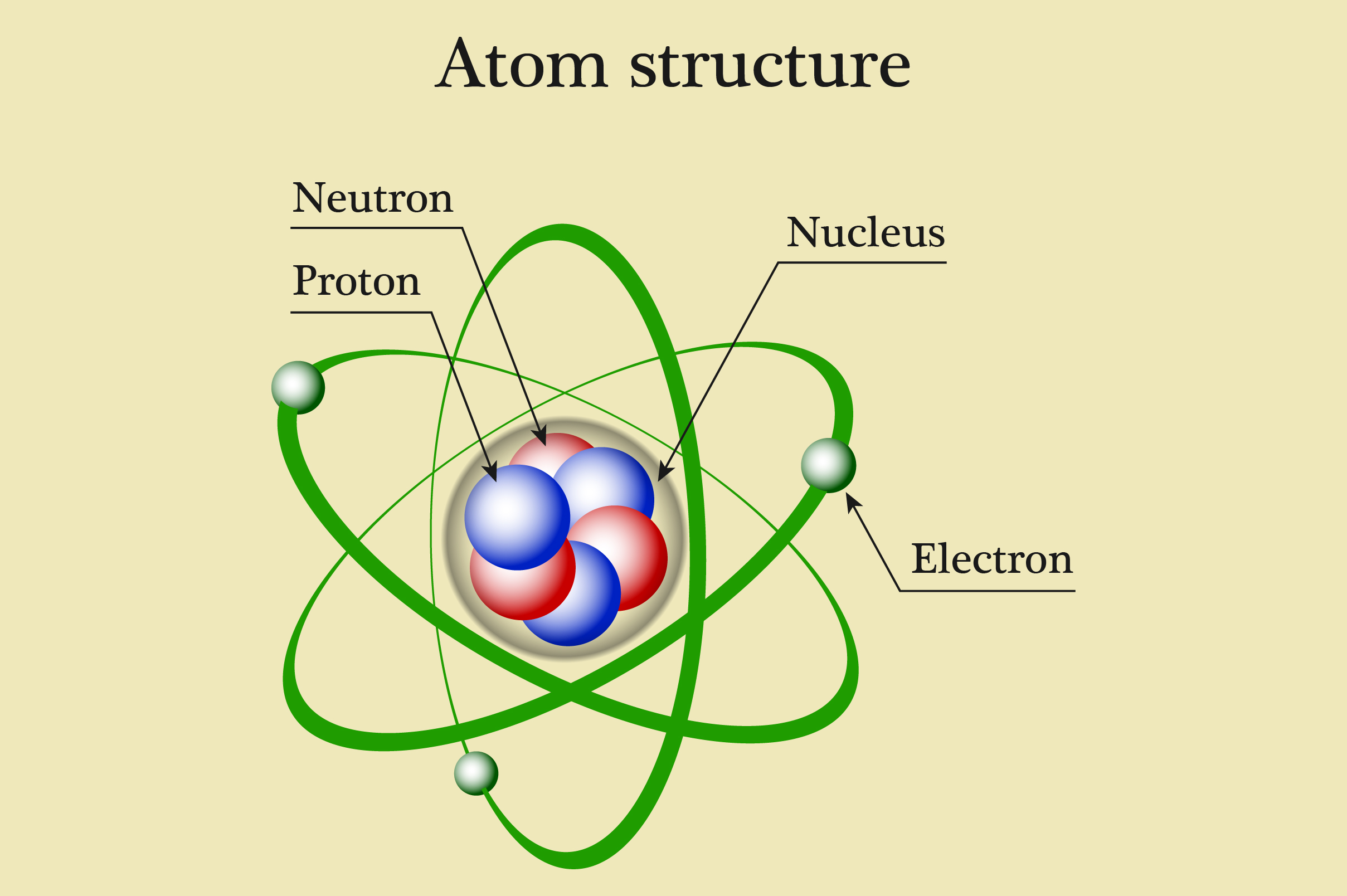
      All matter is made up of tiny particles called atoms. An atom is the smallest unit of an element that still retains the element’s chemical properties. Although extremely small, atoms have an internal structure made of even smaller particles.

      Main Parts of an Atom

      1. Nucleus

        • Located at the center of the atom.

        • Contains protons (positively charged) and neutrons (neutral).

        • Almost all the atom’s mass is concentrated here.

      2. Electrons

        • Negatively charged particles that move around the nucleus.

        • Arranged in energy levels or shells.

        • Their arrangement determines how atoms interact and bond.

      Key Points

      • Protons: Positive charge, mass ≈ 1 atomic mass unit (amu).

      • Neutrons: No charge, mass ≈ 1 amu.

      • Electrons: Negative charge, very small mass compared to protons and neutrons.

      • Atomic number = number of protons.

      • Mass number = protons + neutrons.

      Why Atomic Structure Matters

      Understanding atomic structure helps explain:

      • Chemical reactions

      • Bonding between atoms

      • Properties of elements in the periodic table


      If you'd like, I can also give an extended explanation, diagrams, or multiple-choice questions for practice!

      Here’s a brief introduction to atomic structure:


      Atomic Structure – A Quick Overview

      All matter is made up of tiny particles called atoms. An atom is the smallest unit of an element that still retains the element’s chemical properties. Although extremely small, atoms have an internal structure made of even smaller particles.

      Main Parts of an Atom

      1. Nucleus

        • Located at the center of the atom.

        • Contains protons (positively charged) and neutrons (neutral).

        • Almost all the atom’s mass is concentrated here.

      2. Electrons

        • Negatively charged particles that move around the nucleus.

        • Arranged in energy levels or shells.

        • Their arrangement determines how atoms interact and bond.

      Key Points

      • Protons: Positive charge, mass ≈ 1 atomic mass unit (amu).

      • Neutrons: No charge, mass ≈ 1 amu.

      • Electrons: Negative charge, very small mass compared to protons and neutrons.

      • Atomic number = number of protons.

      • Mass number = protons + neutrons.

      Why Atomic Structure Matters

      Understanding atomic structure helps explain:

      • Chemical reactions

      • Bonding between atoms

      • Properties of elements in the periodic table


      If you'd like, I can also give an extended explanation, diagrams, or multiple-choice questions for practice!

      Here’s a brief introduction to atomic structure:


      Atomic Structure – A Quick Overview

      All matter is made up of tiny particles called atoms. An atom is the smallest unit of an element that still retains the element’s chemical properties. Although extremely small, atoms have an internal structure made of even smaller particles.

      Main Parts of an Atom

      1. Nucleus

        • Located at the center of the atom.

        • Contains protons (positively charged) and neutrons (neutral).

        • Almost all the atom’s mass is concentrated here.

      2. Electrons

        • Negatively charged particles that move around the nucleus.

        • Arranged in energy levels or shells.

        • Their arrangement determines how atoms interact and bond.

      Key Points

      • Protons: Positive charge, mass ≈ 1 atomic mass unit (amu).

      • Neutrons: No charge, mass ≈ 1 amu.

      • Electrons: Negative charge, very small mass compared to protons and neutrons.

      • Atomic number = number of protons.

      • Mass number = protons + neutrons.

      Why Atomic Structure Matters

      Understanding atomic structure helps explain:

      • Chemical reactions

      • Bonding between atoms

      • Properties of elements in the periodic table


      Atomic Structure – A Quick Overview

      All matter is made up of tiny particles called atoms. An atom is the smallest unit of an element that still retains the element’s chemical properties. Although extremely small, atoms have an internal structure made of even smaller particles.

      Main Parts of an Atom

      1. Nucleus

        • Located at the center of the atom.

        • Contains protons (positively charged) and neutrons (neutral).

        • Almost all the atom’s mass is concentrated here.

      2. Electrons

        • Negatively charged particles that move around the nucleus.

        • Arranged in energy levels or shells.

        • Their arrangement determines how atoms interact and bond.

      Key Points

      • Protons: Positive charge, mass ≈ 1 atomic mass unit (amu).

      • Neutrons: No charge, mass ≈ 1 amu.

      • Electrons: Negative charge, very small mass compared to protons and neutrons.

      • Atomic number = number of protons.

      • Mass number = protons + neutrons.

      Why Atomic Structure Matters

      Understanding atomic structure helps explain:

      • Chemical reactions

      • Bonding between atoms

      • Properties of elements in the periodic table


      If you'd like, I can also give an extended explanation, diagrams, or multiple-choice questions for practice!

      Here’s a brief introduction to atomic structure:


      Atomic Structure – A Quick Overview

      All matter is made up of tiny particles called atoms. An atom is the smallest unit of an element that still retains the element’s chemical properties. Although extremely small, atoms have an internal structure made of even smaller particles.

      Main Parts of an Atom

      1. Nucleus

        • Located at the center of the atom.

        • Contains protons (positively charged) and neutrons (neutral).

        • Almost all the atom’s mass is concentrated here.

      2. Electrons

        • Negatively charged particles that move around the nucleus.

        • Arranged in energy levels or shells.

        • Their arrangement determines how atoms interact and bond.

      Key Points

      • Protons: Positive charge, mass ≈ 1 atomic mass unit (amu).

      • Neutrons: No charge, mass ≈ 1 amu.

      • Electrons: Negative charge, very small mass compared to protons and neutrons.

      • Atomic number = number of protons.

      • Mass number = protons + neutrons.

      Why Atomic Structure Matters

      Understanding atomic structure helps explain:

      • Chemical reactions

      • Bonding between atoms

      • Properties of elements in the periodic tabl

                      Electron
                         o
                      /     \
              o ------------------- o
           Electron Shell (2nd shell)
      
                    (Nucleus)
                 +p     n°     +p
                  \    n°    /
                   \        /
                    --------
                  Protons & Neutrons
      
              o ------------------- o
           Electron Shell (1st shell)
                      o       o
                     Electrons
      

      Key:

      • p⁺ = proton (positive charge)

      • = neutron (neutral)

      • o = electron (negative charge)

      • Circles = electron shells

    • Here is a brief and clear Chapter Two on the Historical Development of Atomic Theory:


      The idea of the atom has evolved over many centuries as scientists made new discoveries that improved our understanding of matter.

      1. Dalton’s Atomic Theory (1803)

      John Dalton proposed the first scientific atomic theory. He stated that:

      • All matter is made of tiny, indivisible particles called atoms.

      • Atoms of the same element are identical.

      • Atoms combine in simple ratios to form compounds.

      Dalton’s work marked the beginning of modern atomic science.

      2. J.J. Thomson’s Discovery of the Electron (1897)

      Thomson used cathode ray experiments and discovered the electron, a negatively charged particle.
      He proposed the Plum Pudding Model, suggesting that:

      • The atom is a sphere of positive charge

      • Electrons are scattered inside like "plums in pudding"

      3. Rutherford’s Nuclear Model (1911)

      Ernest Rutherford performed the gold foil experiment. He found that:

      • Atoms have a small, dense, positively charged centre called the nucleus

      • Most of the atom is empty space
        This overturned Thomson’s model.

      4. Bohr’s Planetary Model (1913)

      Niels Bohr improved Rutherford’s model by proposing that:

      • Electrons orbit the nucleus in fixed energy levels (shells)

      • Electrons can move between levels by absorbing or releasing energy

      5. The Modern Quantum Mechanical Model

      Later scientists (Schrödinger, Heisenberg) discovered that:

      • Electrons do not follow fixed orbits

      • Instead, they exist in regions called orbitals

      • The behaviour of electrons is explained by quantum mechanics

      This is the model used today

Site announcements

There are no discussion topics yet in this forum.


Course categories


Available courses

Course Description: Atomic Structure

​This concise course provides a fundamental understanding of the atom, the basic building block of matter. Students will explore the historical development of atomic theory, from early philosophical ideas to modern quantum mechanical models.

​Key Topics Covered

​The course focuses on the internal organization and properties of the atom, including:

Subatomic Particles: Identification and characteristics of protons (positive charge, found in the nucleus), neutrons (no charge, found in the nucleus), and electrons (negative charge, orbiting the nucleus in shells/orbitals).
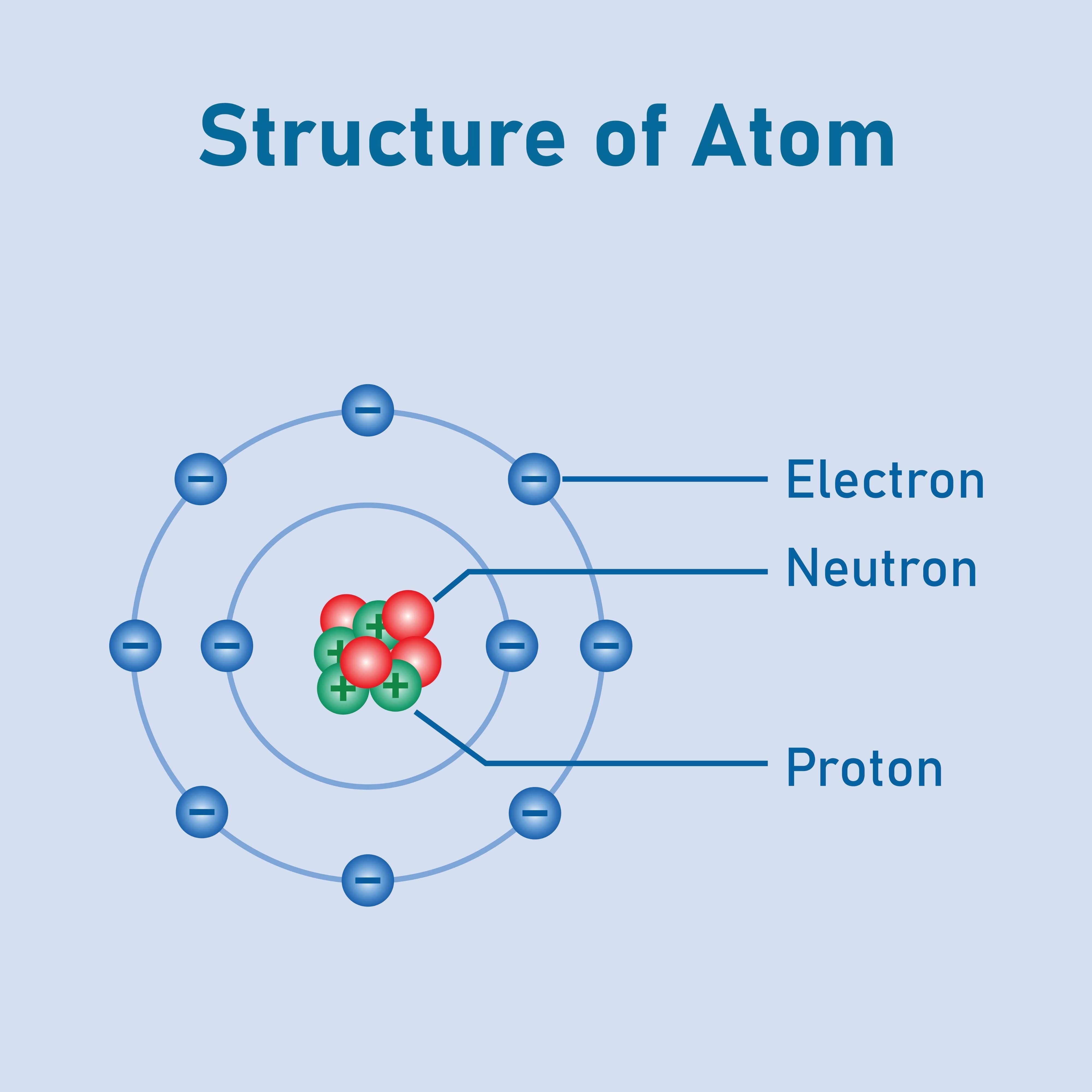
Atomic Definitions: Understanding key terms like Atomic Number (Z) (number of protons), Mass Number (A) (protons + neutrons), and the concept of Isotopes (atoms of the same element with different numbers of neutrons).

Historical Models: A review of influential atomic models, such as Dalton's, Thomson's (Plum Pudding), Rutherford's (Nuclear Model), and Bohr's model, highlighting how scientific understanding evolved.

Electron Configuration & Quantum Mechanics: Introduction to the modern Quantum Mechanical Model, including electron shells (energy levels), subshells (s, p, d, f), orbitals, and the rules governing how electrons fill these energy levels (Aufbau principle, Hund's rule, Pauli exclusion principle).

Periodic Trends: Analyzing how atomic structure dictates the organization of the Periodic Table and influences periodic properties like atomic radius, ionization energy, and electronegativity

Ions and Stability: Explaining how atoms gain or lose electrons to form ions and achieve stable electronic configurations, which is foundational to understanding chemical bonding.

ATOMIC STRUCTURE 1. Atom * Smallest particle of an element that retains its chemical properties. * Made of **protons, neutrons, electrons 2. Subatomic Particles | Particle | Charge | Mass (approx.) | Location | | ------------ | ------ | -------------- | -------------------------------- | | **Proton** | +1 | 1 amu | Nucleus | | **Neutron** | 0 | 1 amu | Nucleus | | **Electron** | –1 | ~0 amu | Outside nucleus (electron cloud) | 3. Atomic Number * Number of **protons** in the nucleus. * Determines the **identity** of an element. * In a neutral atom: **electrons = protons**. 4. Mass Number (A) * Total number of **protons + neutrons**. * ( A = Z + n ) 5. Isotopes * Atoms of the same element (same Z) with different numbers of neutrons. * Same chemical properties, different mass. 6. Electronic Structure * Electrons occupy **energy levels (shells)**: K, L, M…, or n = 1, 2, 3… * Max electrons in a shell = **2n²**. * Example: * n=1 → 2 electrons * n=2 → 8 electrons --- 7. Electron Configuration * Distribution of electrons in shells/subshells. * Example: * Hydrogen: 1s¹ * Oxygen: 1s² 2s² 2p⁴ 8. Ion Formation * Atoms gain or lose electrons to form ions. * Lose electrons → positive ion (cation) * Gain electrons → negative ion (anion) 9. Nucleus * Dense central part containing protons + neutrons. * Contains nearly all the atom’s mass.